
LinkedIn is one of the few ad platforms where you can target people by job function, seniority, company size and industry, using information they’ve chosen to share about their own careers. For B2B tech companies selling to IT leaders, operations heads or software buyers, that’s powerful.
It’s also a platform where clicks tend to cost more than on many other channels, and where poorly planned campaigns can burn through a budget quickly with little to show for it. The good news is that most of the waste comes from a few predictable mistakes. Here’s how our team plans LinkedIn ad campaigns for technology companies.
Start with who, not with the ad
The biggest decision in any LinkedIn campaign is the audience. Before writing a word of ad copy, decide:
- Which companies you want to reach: industry, size, region and any must-have traits, such as using a particular platform.
- Which people inside those companies: job functions, seniority levels and, if useful, specific titles.
- What stage they’re at: never heard of you, aware of you, or actively evaluating.
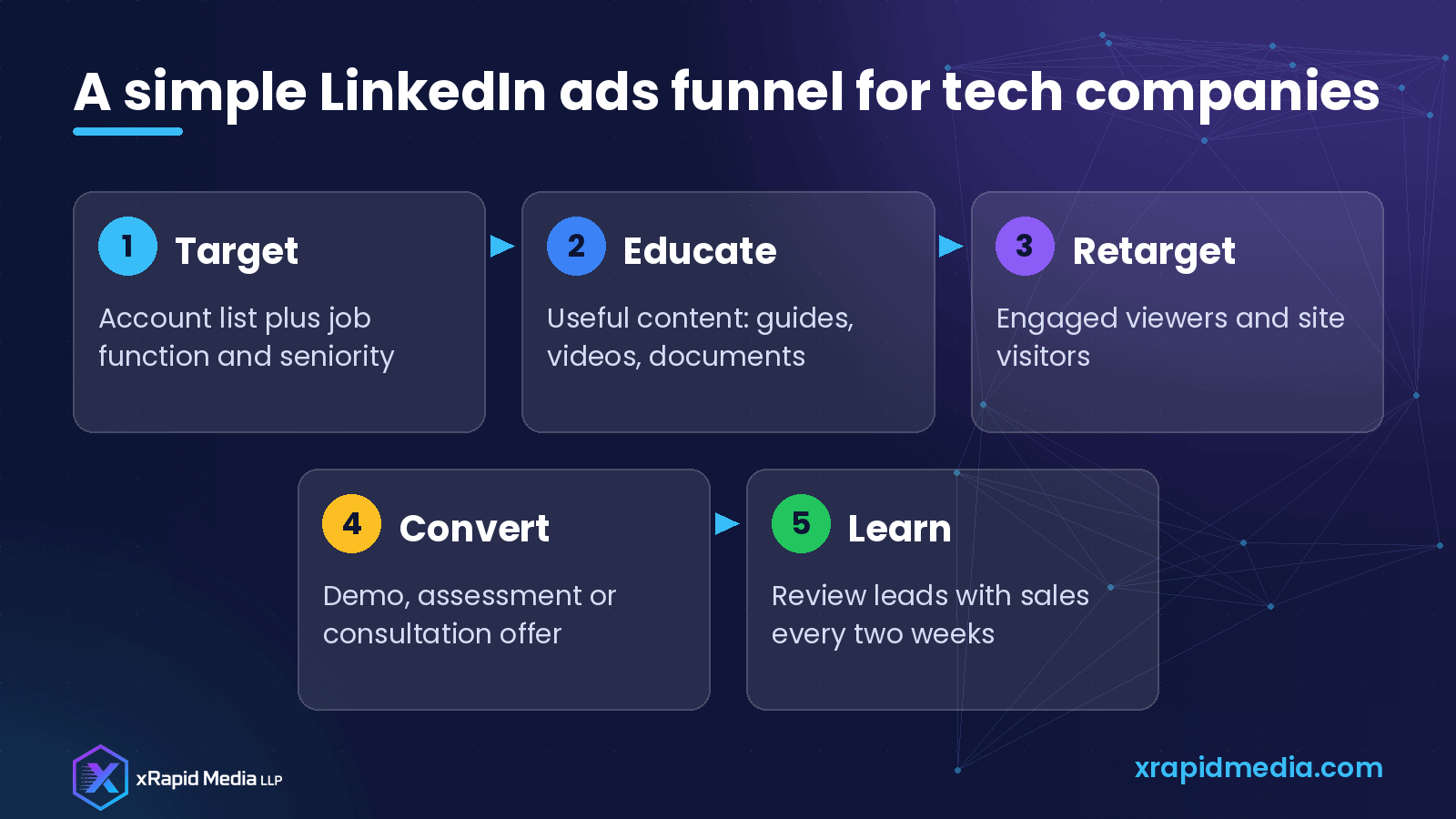
For many B2B tech companies, the best starting point is a target account list. LinkedIn lets you upload a list of companies and target people at those companies, then layer on job function and seniority. This keeps your spend focused on the businesses your sales team actually wants to talk to.
Avoid the most common targeting mistakes
A few habits waste a lot of budget:
- Going too broad. Targeting “Information Technology” as an industry with no other filters reaches a huge mix of people who will never buy.
- Going too narrow. Stacking many filters can shrink an audience so much that ads barely deliver. LinkedIn shows an estimated audience size as you build, so keep an eye on it.
- Leaving audience expansion on by default. Expansion features can show your ads to people outside your chosen criteria. Sometimes that helps, but for tightly defined B2B campaigns it’s worth checking the setting deliberately.
- Ignoring geography. If your sales team covers the US, make sure your location targeting matches.
Choose offers that match the audience’s stage
The offer is what you ask people to do. Asking someone who has never heard of you to “book a demo” is a big leap. Match the offer to the stage:
- Cold audiences: a useful guide, checklist, short video or document ad that teaches something relevant without asking for much.
- Warm audiences (people who engaged with your ads or visited your site): a webinar, case study, comparison guide or calculator.
- Ready audiences: a demo, free assessment or consultation.
Document ads, which let people page through a PDF-style document right in their feed, work well for educational content. Lead Gen Forms, which pre-fill details from a member’s profile, make it easier for people to request content or a meeting without leaving LinkedIn.
Write ads that sound like a peer
LinkedIn members are scrolling between posts from colleagues and industry contacts. Ads that read like a helpful peer tend to fit in better than ads that read like a billboard.
A few practical tips:
- Lead with the problem the audience recognizes, not your company name.
- Use plain language and specific outcomes, such as “cut onboarding time for new support agents” rather than “transform your operations.”
- Keep the image or video simple and readable on a phone.
- Make the call to action clear and honest about what happens next.
Set up tracking before you launch
Install the LinkedIn Insight Tag on your website so you can measure conversions and build retargeting audiences from site visitors. Define conversions that matter, such as a demo request, a consultation booking or a content download.
Connect your Lead Gen Form leads to your CRM, either through a native integration or a tool like Zapier, so leads don’t sit in LinkedIn waiting to be downloaded. Speed of follow-up matters.
Test one thing at a time
LinkedIn campaigns improve through steady testing. Good things to test include:
- Two different headlines or opening lines.
- An image versus a short video.
- Two different offers for the same audience.
- Different seniority levels, such as managers versus directors.
Change one variable at a time and give each test enough time and impressions to show a clear difference before making a call.
Measure pipeline, not just clicks
Click-through rate and cost per lead are useful signals, but they don’t tell you whether a campaign is working for the business. Review leads with your sales team every couple of weeks and ask:
- Did these leads match our target accounts?
- How many turned into real conversations?
- Which campaigns and offers produced the best meetings?
A campaign with fewer, better leads often beats one with lots of cheap leads that never respond.
Wrapping up
LinkedIn ads work best for B2B tech companies when they start with a clear audience, use offers that match where buyers are, sound human and are measured against real pipeline. Start small, focus on your best-fit accounts and improve with steady testing. Done this way, LinkedIn becomes a reliable way to reach the people who actually make buying decisions.
About xRapid Media
xRapid Media LLP is a High Tech B2B Marketing company for technology businesses: software and SaaS companies, IT services and managed service providers, and hardware and IT product vendors. Our team combines positioning and content, account-based marketing, paid ads funnels, verified B2B data, intent signals, email and LinkedIn outreach and appointment setting to help you reach the right buyers and turn their attention into qualified leads and meetings.
Want help putting ideas like these into practice? Email [email protected] or book a time with our team.