

A new rugged laptop, network switch, conference room system or storage appliance can take a long time to design and certify. Then launch day arrives, the spec sheet goes on the website and the sales team waits for orders.
Business buyers don’t buy spec sheets. They buy solutions to problems: fewer device failures in the field, faster networks for growing offices, simpler video meetings, safer storage for sensitive data. A strong launch translates specs into those outcomes and puts them in front of the right people.
Here’s a practical launch plan our team uses with IT hardware vendors.
Step 1: Position around the business problem
Start by answering three questions:
- Who is this product for? Be specific about industries, company sizes and roles.
- What problem does it solve better than what they use today?
- Why should they care now?
For example, “a 14-inch laptop with an Intel processor and 32GB of RAM” describes a product. “A durable laptop built for field teams who can’t afford downtime on job sites” describes a reason to buy.
Turn the most important specs into benefits, and keep the full technical details available for IT teams who want them.
Step 2: Gather proof before launch
Business buyers want evidence. Before launch, collect what you can honestly share:
- Results from your own testing, with clear methods
- Certifications and compliance standards the product meets
- Feedback from beta customers or pilot programs
- Early reviews from analysts or trade media, if available
Be careful with claims. Only use numbers you can back up, and say how they were measured.
Step 3: Equip your channel partners
Many hardware vendors sell through resellers, distributors and MSPs. These partners need to understand and believe in the product before they recommend it.
Give partners a launch kit:
- A short product overview with key benefits
- Ideal customer profiles and target industries
- Pricing, margins and promotions
- Demo units or evaluation programs, if possible
- Co-branded email and social templates
- Competitive positioning and answers to common objections
Run short training sessions and make it easy for partners to ask questions.
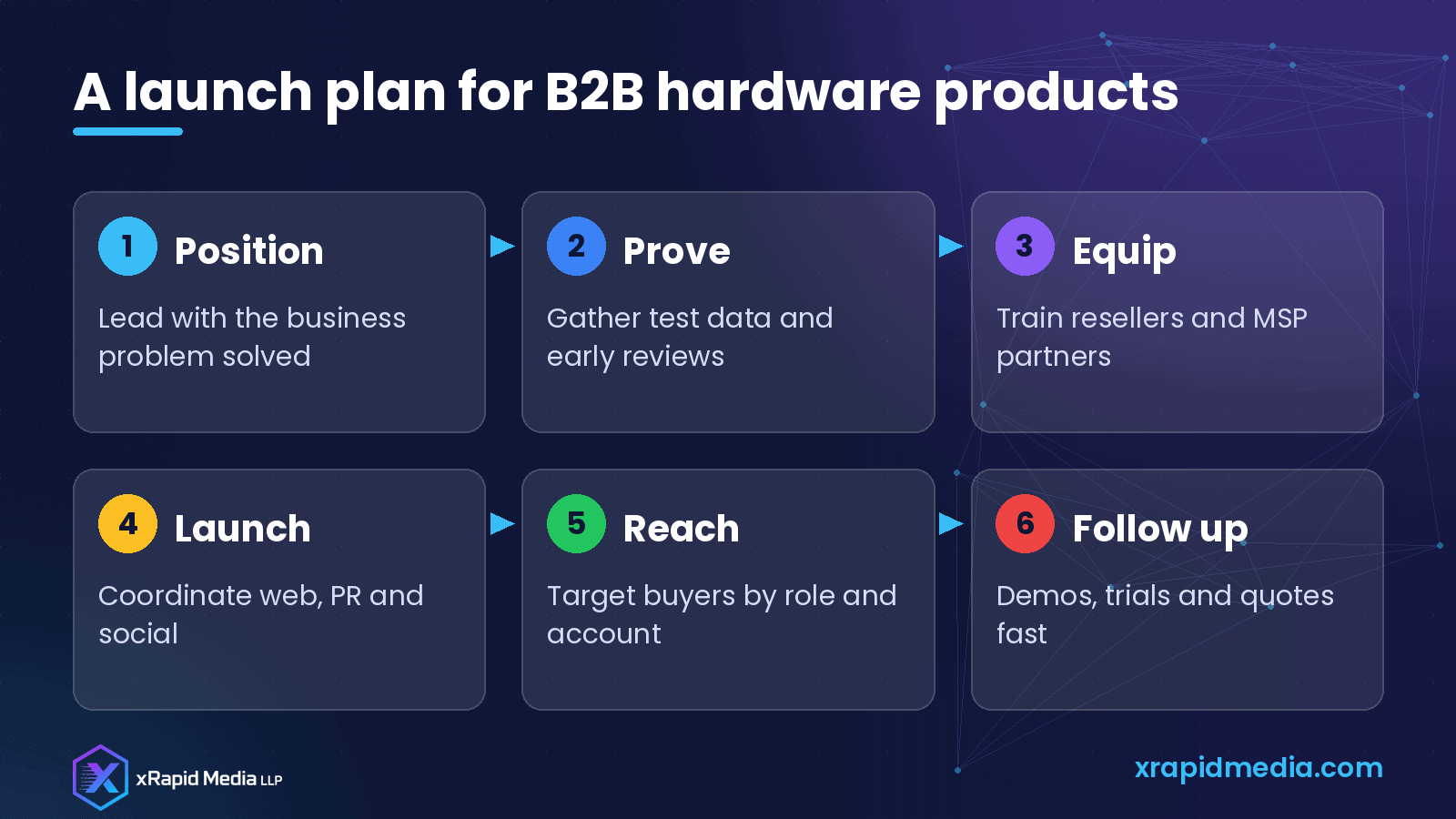
Step 4: Coordinate the launch moment
Line up your launch activities so they reinforce each other:
- A dedicated product page with clear benefits, specs and a strong call to action
- A press release and outreach to relevant trade publications
- LinkedIn posts from the company page and team members
- A launch email to existing customers and partners
- A short product video showing the hardware in real use
If you’re launching at a trade show or event, plan booth demos and pre-book meetings with target accounts ahead of time.
Step 5: Reach buyers by role
Hardware decisions usually involve several people. IT teams care about compatibility, management and support. Finance cares about total cost of ownership. Operations leaders care about uptime and productivity. Procurement cares about warranty, lead times and contracts.
Create short messages for each role and use them in targeted campaigns. LinkedIn ads and account-based outreach let you reach specific roles at specific companies. Verified B2B contact data helps make sure your emails reach the right people.
Step 6: Make the next step easy
Interested buyers will want a quote, a demo, an evaluation unit or a conversation about volume pricing. Make those options obvious on your website and in every campaign.
Respond quickly to requests. In hardware, slow responses can mean losing a deal to a competitor with stock on hand. Be clear about availability and lead times.
Step 7: Keep the momentum going
A launch isn’t a single day. Plan follow-up content for the months after:
- Customer stories once early buyers have deployed the product
- Comparison guides against older models or common alternatives
- Webinars or demo sessions for partners and customers
- Updates on new configurations, accessories or software features
Track which industries and partners are generating the most interest, and focus your effort there.
Common hardware launch mistakes
- Leading with specs instead of benefits
- Leaving channel partners until after launch
- Making claims you can’t back up
- Forgetting the finance and procurement audience
- Going quiet after launch week
Turn great hardware into great pipeline
A thoughtful launch helps your product reach the buyers who need it and gives your sales team and partners something compelling to talk about.
At xRapid Media LLP, we help IT hardware and product vendors with positioning, channel marketing, trade show campaigns, verified B2B data and outreach. If you have a product launch coming up, book a free B2B marketing consultation and let’s plan it together.
About xRapid Media
xRapid Media LLP is a High Tech B2B Marketing company for technology businesses: software and SaaS companies, IT services and managed service providers, and hardware and IT product vendors. Our team combines positioning and content, account-based marketing, paid ads funnels, verified B2B data, intent signals, email and LinkedIn outreach and appointment setting to help you reach the right buyers and turn their attention into qualified leads and meetings.
Want help putting ideas like these into practice? Email [email protected] or book a time with our team.