

Buyers search “[your category] vs [competitor]” long before they fill in a form. A clear comparison page can meet them there, answer real questions and move a serious evaluation forward. A slanted one can do the opposite: train prospects to distrust everything else you publish.
Our team helps B2B tech companies write comparison content that sales is proud to send. The standard is simple. Would you be comfortable if the competitor’s best customer read this page out loud on a call?
When comparison pages help
They help when:
- Buyers already shortlist two or three vendors
- Criteria are concrete: integrations, deployment, support model, pricing style, security review process
- Your product wins for a defined segment, not “everyone”
- Sales keeps hearing the same head-to-head questions
They rarely help when you invent a rival nobody evaluates, or when the page is only a keyword play with no sales use.
Choose opponents buyers actually name
Start from CRM notes, call themes and win/loss interviews. Rank competitors by how often they appear in late-stage deals. Write those pages first. A library of ten thin pages about obscure alternatives usually underperforms two thorough pages about the rivals that matter.
Also consider “build vs buy” or “spreadsheet vs platform” pages when that is the real alternative.
Structure around buyer criteria, not a rant
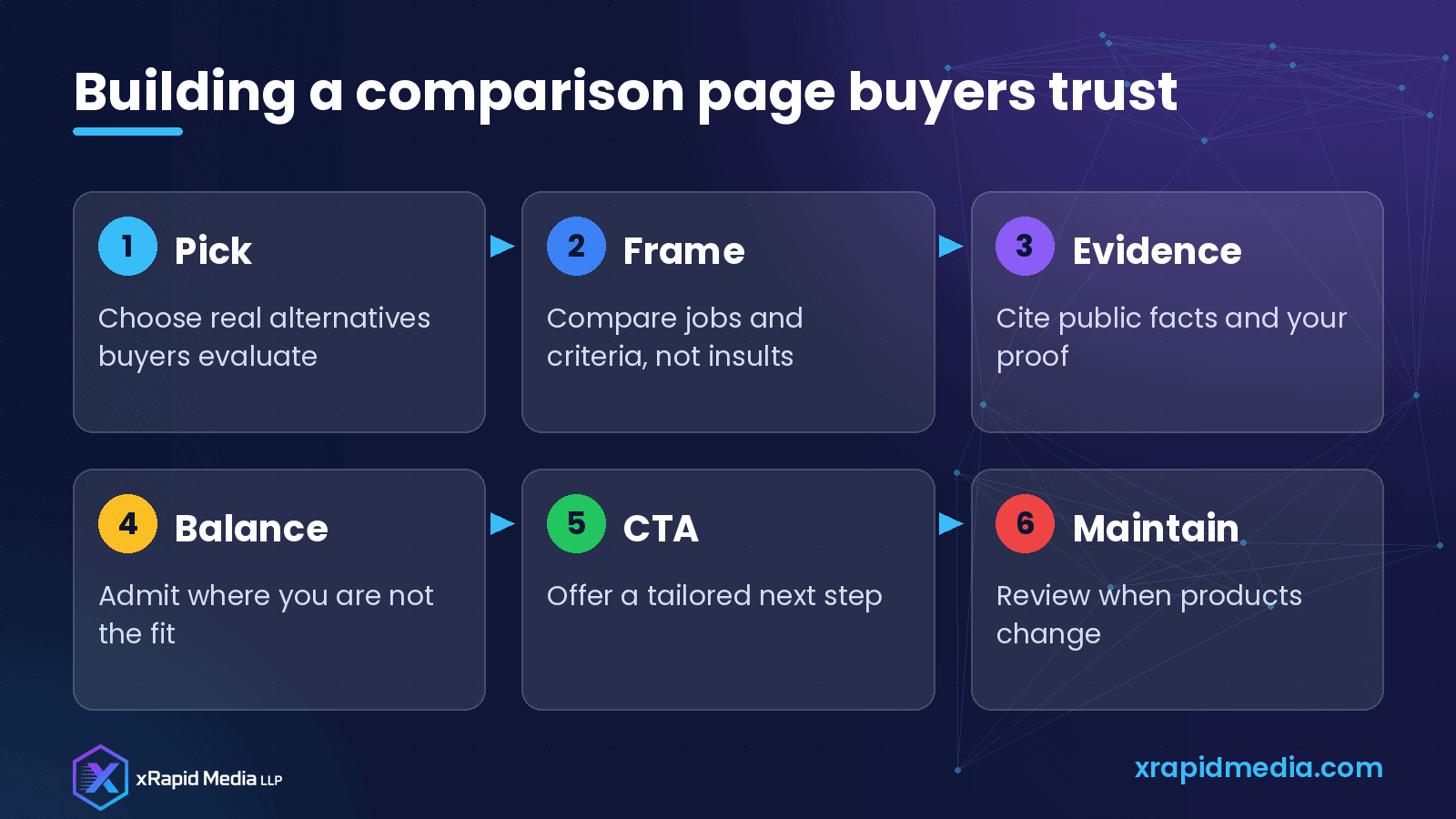
A useful outline:
- Who each option tends to fit
- Side-by-side criteria that buyers care about
- Where you are stronger, with proof
- Where the other option may be a better fit
- Implementation and switching considerations
- A next step that feels consultative
Use the same criteria order on every comparison page so your site feels consistent. Avoid loaded labels like “outdated” or “enterprise-only bloated” unless you can point to a specific, checkable fact.
Be specific and verifiable
“Better security” is vague. “Supports SSO with SAML and provides a public status page” is checkable. Prefer features that appear on public docs, pricing pages or release notes. When something depends on plan tier, say so.
For your own proof, use customer stories you have permission to share, named integrations and concrete workflow examples. Do not invent win rates or market rankings.
Admit tradeoffs on purpose
Paradoxically, naming a tradeoff increases credibility. If a competitor is stronger for a niche industry pack you do not offer, say that and point readers to when you are the better choice. Buyers already suspect bias. Honesty about fit filters out poor opportunities and strengthens the ones that remain.
Sales should review every claim. If reps refuse to say it on a call, delete it from the page.
Design and UX details that matter
Put the comparison table high enough that people do not hunt for it. Make it readable on mobile. Link to sources or “as of [month year]” notes for competitor facts you cite. Offer a path for people who want a live walkthrough of their scenario, not only a generic demo.
SEO still matters: clear titles, helpful headings and pages that answer the query. Just do not stuff every synonym at the cost of clarity.
How comparison pages backfire
Common failure modes:
- Cherry-picking criteria where you win and ignoring what buyers ask
- Outdated competitor claims that sales gets called out on
- Aggressive language that feels personal
- Gating the entire comparison behind a form before any content
- Publishing a page legal or partner teams would reject
Any of these can stall a deal faster than having no page at all.
Keep pages alive
Assign an owner. Review after major releases, pricing changes or a wave of lost deals mentioning that rival. Add a visible “Last reviewed” date. Connect the page to battle cards so website and sales talk tracks stay aligned.
Promote thoughtfully: include links from related guides, enablement kits and retargeting for visitors who viewed competitor-related content. Do not run ads that attack a competitor by name if that violates platform policies or your brand tone.
A practical starting set
Ship one excellent page against your top rival, one against the second and one “how to evaluate [category]” guide that teaches criteria without naming names. Measure assisted pipeline, not only organic sessions. Ask new opportunities whether the page helped their internal discussion.
Honest comparison content is marketing that respects the buyer’s intelligence. Done well, it shortens clarification cycles and gives champions language they can reuse with their stakeholders.
Align SEO with sales language
Use the phrases buyers type and the phrases reps hear on calls. If customers say “lighter alternative to X,” that wording may belong in a subheading. Just keep the tone respectful. Comparison pages that rank but embarrass your sellers are not a win.
When you refresh the page, update internal links from blog posts and solution pages so equity flows to the comparisons that drive pipeline.
If you want help building comparison pages, battle cards and the SEO around them for a B2B tech product, xRapid Media LLP can work with your team end to end. Book a free B2B marketing consultation and we will review what buyers already ask you in deals.
About xRapid Media
xRapid Media LLP is a High Tech B2B Marketing company for technology businesses: software and SaaS companies, IT services and managed service providers, and hardware and IT product vendors. Our team combines positioning and content, account-based marketing, paid ads funnels, verified B2B data, intent signals, email and LinkedIn outreach and appointment setting to help you reach the right buyers and turn their attention into qualified leads and meetings.
Want help putting ideas like these into practice? Email [email protected] or book a time with our team.