
Ask a platform engineer how they evaluate a new tool and the answer is usually some version of “I try it.” Marketing copy and polished demos help, but technical buyers in cloud and DevOps want to see how a product behaves when they run it themselves.
Hands-on workshops, sometimes called labs or immersion days, meet that need. Attendees spend an hour or two working through real tasks with your product while your experts help. Done well, these sessions build trust faster than almost any other format and create a list of engaged, qualified accounts.
Our team at xRapid Media LLP, a High Tech B2B Marketing company, helps cloud, DevOps and infrastructure companies plan programs like this. Here is the approach that tends to turn workshops into pipeline rather than just good feedback forms.
Decide who the workshop is for
A workshop open to “anyone interested in Kubernetes” will attract students, job seekers and competitors along with buyers. That is fine for community building, but pipeline workshops need a narrower audience.
Define:
- The roles you want in the room, such as platform engineers, SREs, DevOps leads or cloud architects.
- The companies you want to reach, using your ideal customer profile and, where possible, a named list of target accounts.
- The problem the workshop solves, described in their words, such as reducing deployment failures or getting visibility into cloud costs.
Some vendors run separate sessions by experience level or cloud provider. Smaller, more focused groups usually produce better conversations.
Design the lab around a real task
The biggest mistake is turning the workshop into a guided product tour. Engineers can tell when they are being walked through a feature list. Instead, build the lab around a realistic task they would actually do at work:
- Setting up monitoring for a sample microservices application and tracking down a planted issue.
- Building a deployment pipeline that rolls back automatically when a health check fails.
- Applying policies to catch misconfigured cloud resources before they reach production.
Provide pre-built environments so attendees are not stuck installing tools for the first half hour. Test the lab several times with people who did not build it, and have a fallback for when something breaks, because something usually does.
Promote with personal invitations
Workshops have limited seats, which makes them easy to promote personally. Combine:
- Invitations from account executives and sales development reps to contacts at target accounts.
- Email to engaged contacts in your database, such as trial users and webinar attendees.
- Targeted ads aimed at the right roles and companies.
- Partner channels, such as cloud marketplaces or consulting partners who serve the same buyers.
Ask a short qualifying question at registration, like what they hope to solve or what tools they use today. It helps you personalize the session and the follow-up.
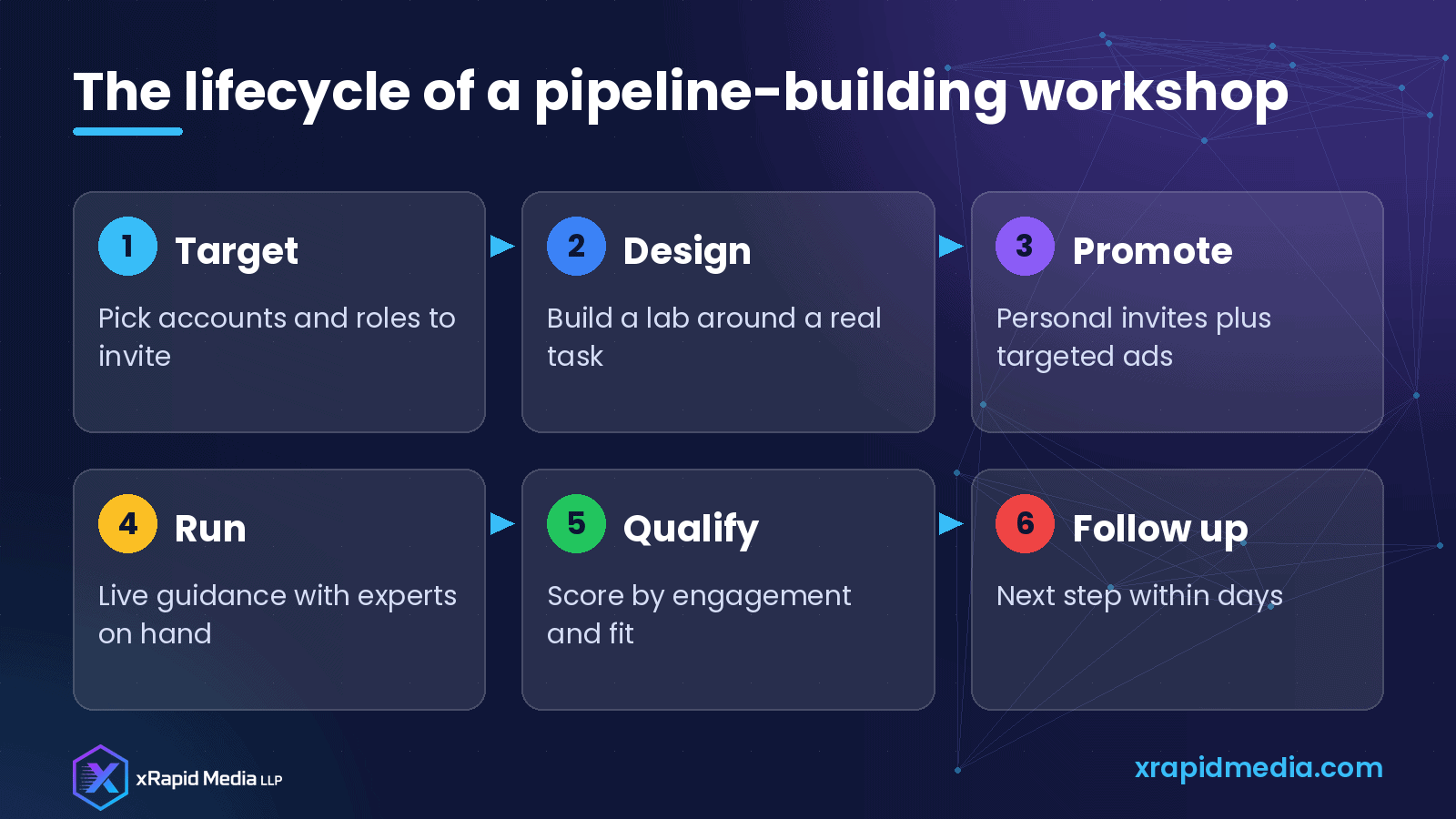
Run it like a great class
During the session, the experience matters as much as the content.
- Keep the opening short and get people working quickly.
- Have enough technical helpers to answer questions, ideally one for every small group of attendees.
- Encourage questions in chat and out loud, and note them for follow-up.
- Leave time at the end for open discussion about how attendees would apply the product to their own environment.
Make sure helpers know how to recognize buying signals, such as questions about pricing, security reviews, team rollouts or integration with specific tools, and record them right after the session.
Qualify using engagement and fit
Workshop platforms and lab environments can show how far each attendee got. Combine that with what you know about the person and company:
- Completed the lab and asked about rollout or pricing: high priority for a sales conversation.
- Completed the lab, good fit, no buying questions: invite to a technical follow-up or trial.
- Dropped off early: offer help or a recording, and find out what got in the way.
- Poor fit: keep in nurture without pushing for a meeting.
Agree these rules with sales before the workshop, so follow-up is consistent.
Follow up within days, not weeks
Engagement fades fast. Within a few days, send each attendee something relevant to how they did: their lab results if available, answers to questions they asked and a clear next step. For high-priority accounts, the next step should be a conversation with a solutions engineer, not a generic newsletter.
Offer access to the lab environment for a short period afterward, so attendees can show colleagues. A workshop attendee who brings their team to a second session is a strong signal.
Measure the program over time
Track more than attendance. Look at meetings booked, opportunities created and deals influenced by workshop attendees over the following months. Compare workshop topics and audiences to learn which combinations produce the best pipeline, and retire the ones that only fill seats.
Conclusion
Hands-on workshops let cloud and DevOps buyers experience your product in a realistic way, with experts on hand, and they give your sales team a warm, qualified list. Target the right roles and accounts, design labs around real tasks, promote personally, run sessions like a great class and follow up quickly based on engagement. The result is pipeline built on trust.
If you want help planning technical workshops and campaigns that reach the right engineering buyers, book a free B2B marketing consultation with xRapid Media LLP.
About xRapid Media
xRapid Media LLP is a High Tech B2B Marketing company for technology businesses: software and SaaS companies, IT services and managed service providers, and hardware and IT product vendors. Our team combines positioning and content, account-based marketing, paid ads funnels, verified B2B data, intent signals, email and LinkedIn outreach and appointment setting to help you reach the right buyers and turn their attention into qualified leads and meetings.
Want help putting ideas like these into practice? Email [email protected] or book a time with our team.