

“Free security assessment” is one of the most common offers in cybersecurity marketing. It is also one of the most misunderstood. Done well, it gives a prospect something genuinely useful, demonstrates how your team thinks and opens a natural conversation about next steps. Done badly, it attracts accounts that will never buy, overwhelms your engineers and teaches the market that your expertise is worth nothing.
The difference comes down to scope, qualification and follow-up. Our team at xRapid Media LLP, a High Tech B2B Marketing company, works with cybersecurity vendors, MSSPs and IT services firms on offers that turn interest into qualified meetings. Here is the approach we recommend.
Define a fixed, honest scope
The word “assessment” means very different things to different buyers. Some expect a full penetration test. Others expect a quick questionnaire. Remove the guesswork by defining exactly what is included:
- What is reviewed, such as external attack surface, email security configuration, Microsoft 365 or Google Workspace settings, or backup practices.
- How it is done, such as a guided questionnaire, a read-only configuration review or an external scan.
- How long it takes on both sides.
- What the customer receives at the end, such as a short report and a review call.
Be equally clear about what it is not. A light-touch review is not a penetration test, an audit or a compliance certification, and your marketing should never suggest otherwise.
Name it for what it is
Generic labels like “free security assessment” blend into every other vendor’s site. More specific names set expectations and attract better-fit buyers: “Email Security Configuration Review,” “External Exposure Snapshot” or “Backup and Recovery Readiness Check.” A specific name also makes the value easier to understand for a busy IT manager.
Qualify before you commit engineering time
Because the assessment costs you real time, it should be offered to accounts that match your ideal customer profile. Practical ways to qualify:
- Ask a few short questions on the request form, such as company size, current tools and the main concern.
- Make the offer prominent in targeted campaigns to fit accounts, rather than broadcasting it everywhere.
- Hold a short scoping call before starting, where you confirm fit and explain the process.
- Politely redirect accounts that are too small or outside your focus to a self-serve checklist instead.
Qualifying is not about being exclusive. It protects the experience for the buyers you can actually help.
Agree access and rules in writing
Security assessments involve sensitive information and sometimes access to systems. Treat that seriously from the start:
- Get written authorization from someone with authority before any scanning or configuration review.
- Explain what data you will see, how it is stored and when it is deleted.
- Use read-only access wherever possible, and document what was accessed.
- Agree how findings will be shared and who receives the report.
This is good practice, and it also signals professionalism. Buyers notice when a vendor handles their data more carefully than they expected.
Deliver findings in plain language
The report is your marketing asset. A strong one usually includes:
- A short executive summary that a non-technical leader can read in two minutes.
- Findings grouped by area, each explained in plain language with why it matters.
- A priority rating based on risk and effort, so the reader knows where to start.
- Quick wins the customer can fix on their own.
Present findings calmly and accurately. Avoid inflating severity or using fear to push a sale. A prospect who feels manipulated by a report will not trust your team with their security.
Walk through it live
Always schedule a review call rather than emailing a PDF. Walking through findings lets you answer questions, gauge priorities and understand internal constraints such as budget timing or staffing. Invite the technical contact and, where possible, the person who owns the budget.
Follow up with options, not pressure
At the end of the call, offer clear next steps that match what you found. That might be a scoped remediation project, a managed service, a specific product or simply a check-in in a few months. Some accounts will fix the quick wins themselves and come back later. That is still a good outcome if they remember who helped.
Track every assessment in your CRM, including the main findings, the proposed next step and the outcome. Over time this shows which assessments lead to revenue and which need to be reshaped.
Conclusion
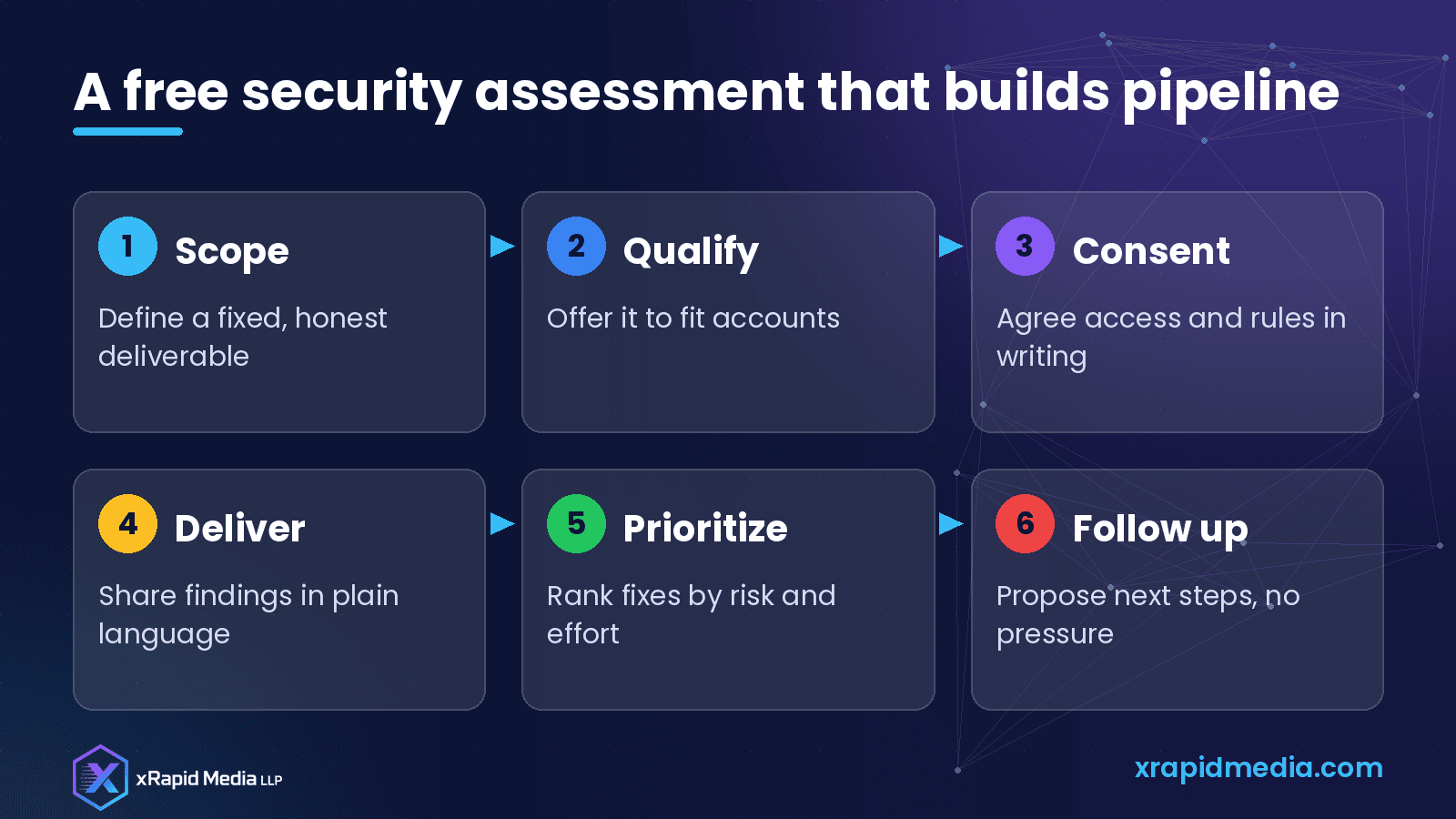
A free security assessment works when it has a fixed scope, a specific name, a qualified audience, written authorization, a clear report and a respectful follow-up. Treated this way, it demonstrates expertise instead of giving it away.
If you want help designing and promoting security offers that bring in qualified buyers, book a free B2B marketing consultation with xRapid Media LLP.
About xRapid Media
xRapid Media LLP is a High Tech B2B Marketing company for technology businesses: software and SaaS companies, IT services and managed service providers, and hardware and IT product vendors. Our team combines positioning and content, account-based marketing, paid ads funnels, verified B2B data, intent signals, email and LinkedIn outreach and appointment setting to help you reach the right buyers and turn their attention into qualified leads and meetings.
Want help putting ideas like these into practice? Email [email protected] or book a time with our team.