
Security leaders are flooded with news: new vulnerabilities, ransomware groups, breaches at suppliers, new government advisories. Every week brings another headline that a CISO’s board might ask about.
For cybersecurity vendors, MSSPs and IT security consultancies, that flood is an opportunity. Buyers need someone to explain what’s real, what matters to them and what to do next. If your company becomes that trusted voice, you earn attention long before a buying decision.
Here’s how our team helps security companies turn threat news into content that builds trust, without fear tactics.
Why threat news works for security marketing
Security buying decisions are rarely urgent until they suddenly are. A major incident in the news makes executives ask, “Could this happen to us?” That moment is when helpful, credible analysis is most valuable.
Timely content also shows expertise in a way product pages can’t. It proves your team understands the threat landscape and can explain it clearly.
Step 1: Watch the right sources
Build a simple monitoring routine. Useful sources include:
- Government advisories, such as CISA’s alerts and Known Exploited Vulnerabilities catalog in the US
- Vendor security advisories and patch notes
- Research published by established security firms
- Reputable security news outlets
Assign someone to check these daily and flag stories that are relevant to your customers’ industries and tech stacks.
Step 2: Verify before you publish
Accuracy is everything in security content. A wrong CVE number, an exaggerated impact or a misattributed attack can damage your credibility quickly.
Go to primary sources wherever possible. Quote advisories exactly. Be clear about what’s confirmed and what’s still being investigated. If attribution is uncertain, say so. Security buyers notice and appreciate this kind of care.
Step 3: Explain it in plain English
Your audience includes technical practitioners and business leaders. Write so both can follow:
- What happened, in two or three sentences
- Who is affected: which products, versions or industries
- How serious it is, based on what’s known
- What has been fixed and what hasn’t
Avoid jargon where possible, and define it where you can’t.
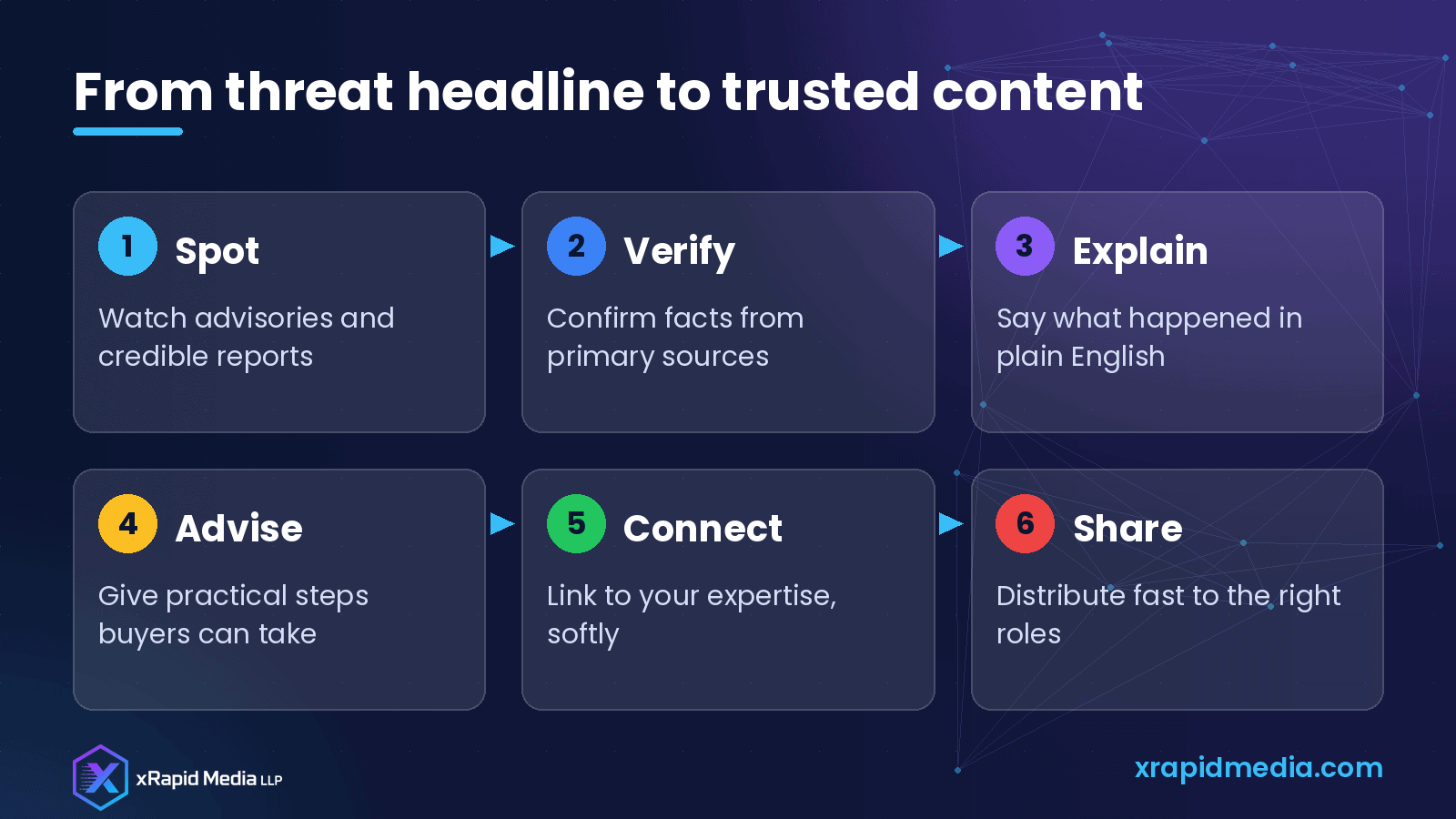
Step 4: Give practical advice
The most useful part of any threat analysis is “what should I do?” Offer clear steps, such as checking specific versions, applying patches, reviewing logs or tightening a configuration. Include steps for smaller teams that may not have dedicated security staff.
Practical advice is what gets content forwarded inside a company, from an IT manager to their boss.
Step 5: Connect to your expertise without a hard sell
It’s fine to mention how your product or service helps, but keep it short and honest. A line like “If you need help checking your environment, our team can assist” works better than a pitch disguised as news.
Avoid fear-based messaging. Security leaders are tired of scare tactics, and exaggeration can look opportunistic during a real incident.
Step 6: Distribute fast, to the right people
Timing matters. A clear summary published within a day of a major advisory can be very useful. Share it through:
- Your blog or resource center
- LinkedIn posts from your company page and subject matter experts
- A short email to customers who might be affected
- Your sales team, who can share it with prospects in relevant industries
Tailor the message by role. A CISO may want risk context; an IT admin wants the patch details.
Build a repeatable format
Consistency makes this sustainable. Create a standard template, such as “What happened, who’s affected, what to do, how we can help,” and use it for every update. Some teams publish a regular weekly roundup in addition to rapid alerts for major events.
Over time, this builds a library of useful content and shows buyers that your team is consistently paying attention.
Turn readers into conversations
Content builds awareness, but you also want to know who’s engaging. Offer a deeper resource, like a checklist or short webinar, in exchange for contact details. Track which accounts read your threat content, and use that as a signal for thoughtful, relevant outreach.
Common mistakes to avoid
- Publishing before confirming the facts
- Using fear and exaggeration to drive clicks
- Writing only for deeply technical readers
- Pitching too hard during an active incident
- Posting once and never following up when new details emerge
Be the source buyers trust
In security, trust is the product before the product. Clear, accurate, helpful content is one of the best ways to earn it.
At xRapid Media LLP, we help cybersecurity vendors and IT service providers with content, positioning, account-based marketing and outreach to security decision-makers. To build a content program that buyers actually read, book a free B2B marketing consultation with our team.
About xRapid Media
xRapid Media LLP is a High Tech B2B Marketing company for technology businesses: software and SaaS companies, IT services and managed service providers, and hardware and IT product vendors. Our team combines positioning and content, account-based marketing, paid ads funnels, verified B2B data, intent signals, email and LinkedIn outreach and appointment setting to help you reach the right buyers and turn their attention into qualified leads and meetings.
Want help putting ideas like these into practice? Email [email protected] or book a time with our team.