

Some of the most motivated buyers in the communications market are not looking for new features. They are looking for a way out. Their on-premise phone system or contact center platform is aging, support is getting harder to find, hardware is wearing out, and the people who know how it was configured may have moved on. They know they need to migrate. What they lack is confidence about how to do it without disrupting customers.
For cloud contact center vendors, resellers and channel partners, these organizations represent strong demand. But they do not respond well to generic “move to the cloud” messaging. They need specific, practical help.
Our team at xRapid Media LLP is a High Tech B2B Marketing company and a Premier Vonage Channel Partner. We help communications vendors and partners build campaigns that reach migration-ready buyers and turn their concerns into qualified conversations. Here is how we approach it.
Understand the migration buyer’s real concerns
A team running an older system usually has a mix of worries:
- Will customers notice a disruption during cutover?
- Can we keep our phone numbers, call flows and reporting?
- How do we connect the new platform to our CRM and help desk?
- How long will agents need to learn new tools?
- Can we add digital channels, or is this just a like-for-like phone replacement?
The last question is an opportunity. Many organizations moving off legacy systems want to add channels their customers already use, including video, WhatsApp, SMS, chat and email alongside voice. A migration campaign that only talks about replacing phones misses that ambition.
Identify accounts likely to be migrating
Good targeting saves budget and sales time. Signals worth combining include:
- Job postings that mention maintaining a specific legacy phone platform.
- Technology data from reputable providers showing older on-premise systems.
- Intent data showing research on contact center migration or cloud contact center topics.
- Website visits to migration, pricing or integration pages from target accounts.
Verify contacts before outreach. Migration projects often involve IT, operations and customer service leadership, so build a small buying committee for each account rather than relying on a single name.
Lead with education, not a pitch
Migration buyers need to understand their options before they will talk to a vendor. Useful content includes:
- A plain-language guide to planning a contact center migration.
- A checklist covering numbers, call flows, integrations, reporting and training.
- A comparison of like-for-like replacement versus an omnichannel upgrade.
- A short explainer on running old and new systems in parallel during cutover.
Keep the tone calm. These buyers are already anxious about risk, so fear-based messaging about outages tends to backfire.
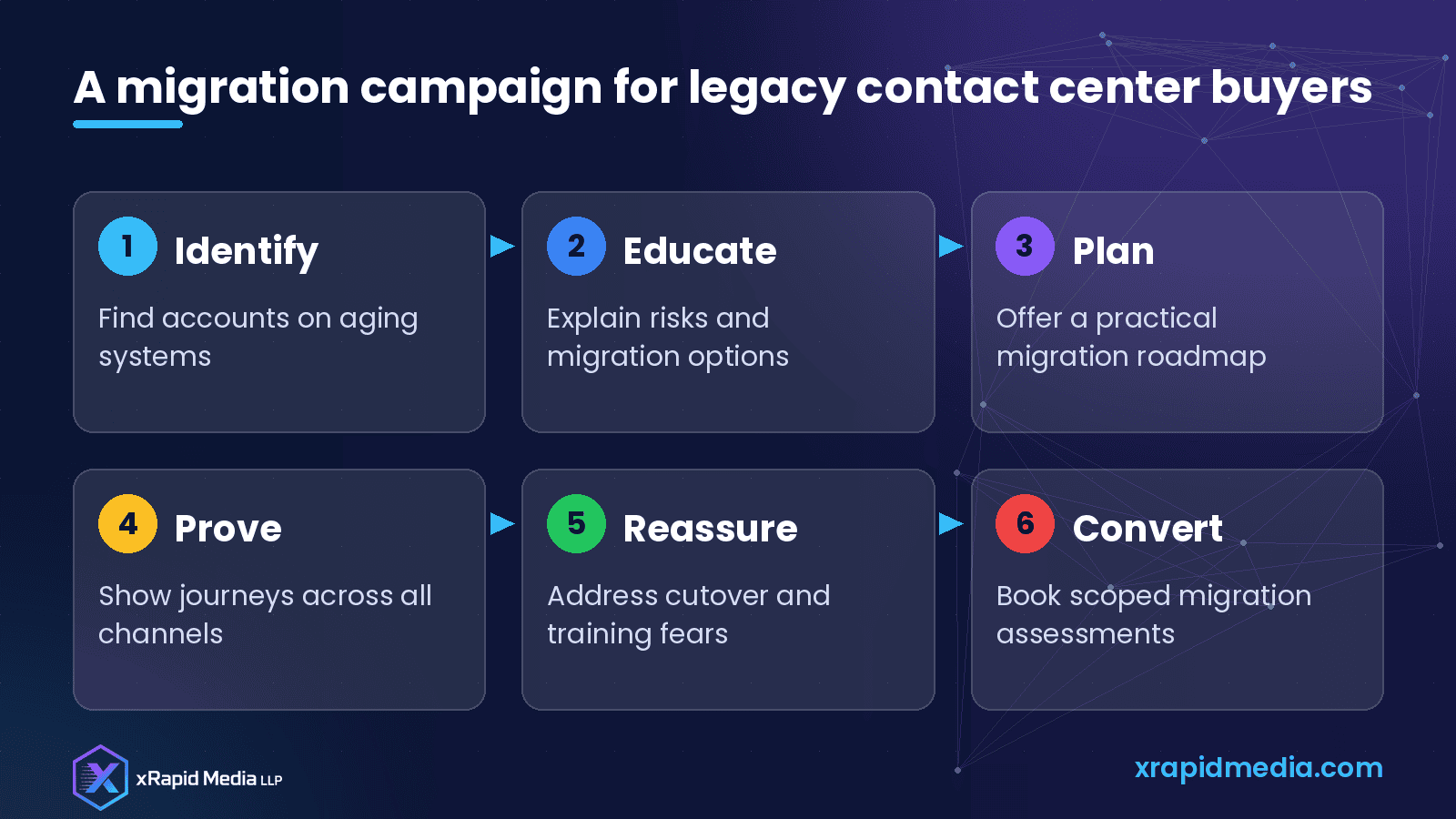
Show the full journey across channels
When migration buyers see a demo, they want to see their own situation. Build demos and content around realistic journeys that cross channels: a customer who starts on SMS and escalates to a voice call, a support case that moves from chat to a video session, or an email inquiry continued on WhatsApp.
Make sure voice, video, WhatsApp, SMS, chat and email all appear in the story, and show what the agent and supervisor see at each step. This helps buyers picture a better operation, not just a newer phone system.
Address cutover and training fears directly
The most common reason migration projects stall is fear of disruption. Address it in your marketing:
- Describe a phased migration approach, starting with a pilot team.
- Explain how number porting and call routing are handled.
- Outline the training plan for agents and supervisors.
- Share how the partner supports the first weeks after go-live.
A practical example: a partner could publish a one-page “first 30 days after migration” plan showing pilot, wider rollout, training sessions and review checkpoints. It is a simple asset, and it answers the question many buyers are afraid to ask.
Offer a scoped migration assessment
A free, scoped migration assessment is often the best conversion offer for these campaigns. It gives buyers something concrete: a review of their current setup, a list of integrations to plan for, a recommended channel mix and a rough migration sequence.
Keep the assessment focused and deliver it as a written document the buyer can share internally. That document becomes the foundation for the business case and the first project plan.
Coordinate outreach across channels
Run the campaign as a coordinated sequence rather than isolated emails. A typical flow for a target account might combine a helpful email with the migration checklist, a LinkedIn connection from the partner’s specialist, a retargeting ad pointing to the migration guide, and a follow-up call offering the assessment. Keep the messages consistent so the account sees one helpful vendor.
As a Premier Vonage Channel Partner, we see migration conversations move faster when the campaign, demo and assessment all tell the same story about voice, video, WhatsApp, SMS, chat and email.
Conclusion
Organizations on aging phone and contact center systems are motivated buyers who need confidence, not hype. Target them carefully, educate first, show real omnichannel journeys, address cutover fears and offer a scoped assessment that creates a clear next step.
If you want help building contact center migration campaigns that generate qualified meetings, book a free B2B marketing consultation with xRapid Media LLP.
About xRapid Media
xRapid Media LLP is a High Tech B2B Marketing company for technology businesses: software and SaaS companies, IT services and managed service providers, and hardware and IT product vendors. Our team combines positioning and content, account-based marketing, paid ads funnels, verified B2B data, intent signals, email and LinkedIn outreach and appointment setting to help you reach the right buyers and turn their attention into qualified leads and meetings.
Want help putting ideas like these into practice? Email [email protected] or book a time with our team.