
B2B tech buyers rarely make a decision after one visit. They read a blog post, leave, come back weeks later to check pricing, forward a link to a colleague and then go quiet while they talk to other vendors. A single deal can involve several people and take months.
Retargeting is one of the most practical ways to stay visible during that long, messy process. Done well, it reminds the right people why you’re worth talking to. Done badly, it follows strangers around the internet with the same banner for months.
Here’s how our team approaches retargeting for software, SaaS and IT companies.
What retargeting actually does
Retargeting shows ads to people who have already interacted with you, for example by visiting your website, watching a video, opening a lead form or engaging with your LinkedIn page. Because these people already know your name, the ads can be more specific than cold advertising.
Common platforms include LinkedIn, Google’s display and YouTube network and Meta. Each has its own rules for building audiences, and privacy settings, consent requirements and browser changes affect how large those audiences can be. Always check that your tracking and consent setup follows the rules in the regions you target.
Segment by what people did
The biggest mistake is putting every website visitor into one audience and showing them all the same ad. Someone who read a blog post about cloud security is in a very different place from someone who looked at your pricing page twice.
Build separate audiences based on behavior, such as:
- Blog and resource readers
- Product or solution page visitors
- Pricing and demo page visitors
- People who started but didn’t finish a form
- Current customers
Each group needs a different message.
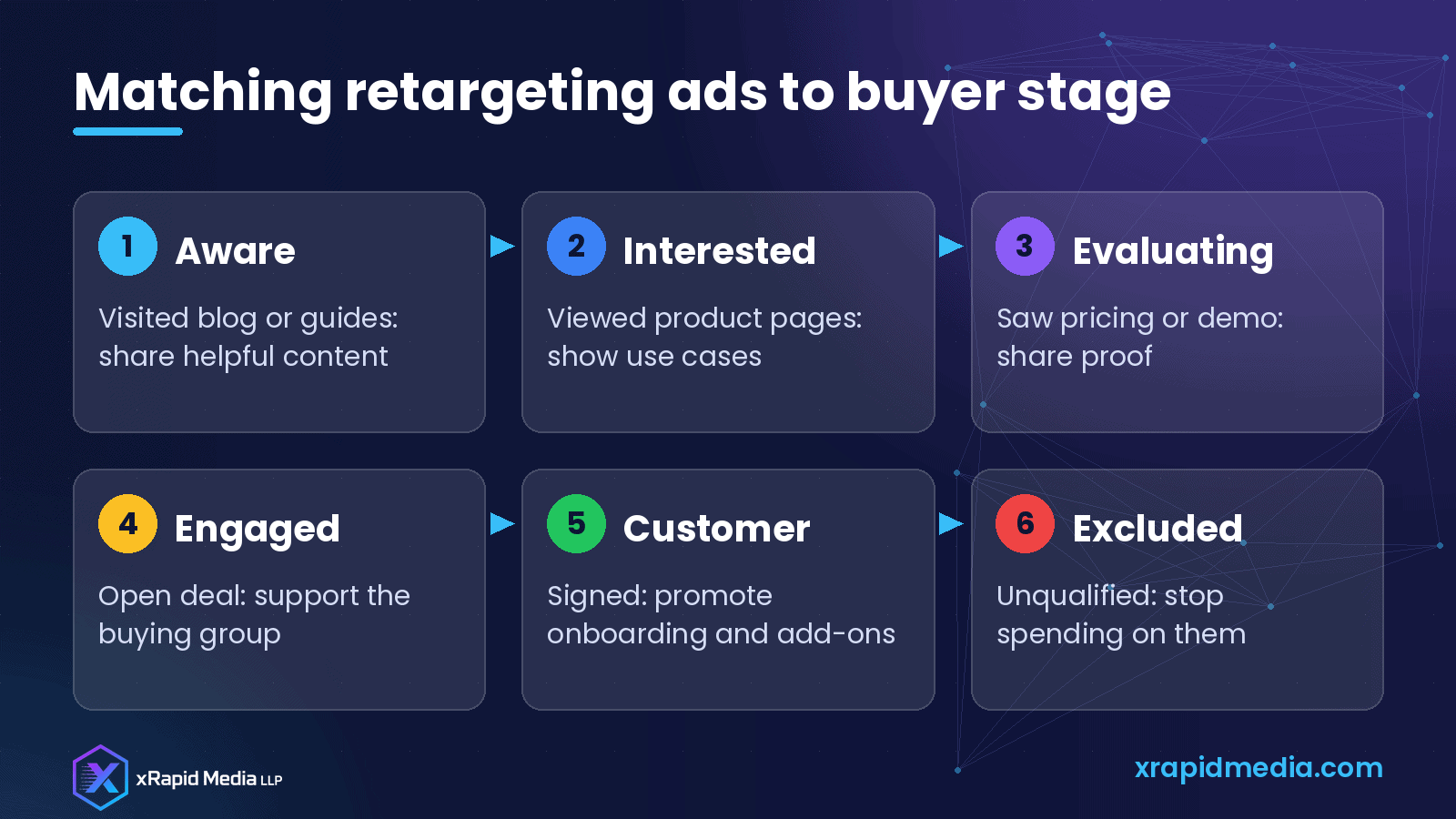
Match the ad to the stage
For early-stage visitors, lead with something useful: a guide, checklist, short video or webinar. They’re not ready for “Book a demo” yet.
For people who looked at product pages, show specific use cases, integrations or short product clips. Help them picture how your product works in a company like theirs.
For pricing and demo page visitors, show proof: customer stories, reviews on trusted platforms, security credentials and a clear offer to talk.
Think about the buying group
In B2B, the person who visits your website is often not the only decision-maker. LinkedIn in particular lets you target by company and job role, so you can combine retargeting with account-based targeting.
For example, if several people from one target account visit your site, you might show ads to other relevant roles at that company, such as IT leaders, finance or security, with messages tailored to their concerns.
Control frequency and refresh creative
Seeing the same ad over and over is annoying and makes your brand look careless. Set frequency caps where the platform allows it, and refresh your creative regularly. Rotating a few variations on the same message keeps things feeling fresh.
Also set sensible time windows. A visitor from two days ago and one from eight months ago shouldn’t be treated the same.
Exclude the right people
Retargeting budgets are often wasted on people who will never buy. Exclude:
- Existing customers from acquisition campaigns
- Job seekers who visited your careers page
- Your own employees and partners, where possible
- Visitors from countries or segments you don’t serve
This keeps your budget focused and your reporting cleaner.
Connect ads to sales
Retargeting works best when it supports what your sales team is already doing. Share which accounts are engaging with ads, and time campaigns around outreach. If an SDR is emailing a list of target accounts, a matching LinkedIn campaign can make your name more familiar when the email arrives.
In your CRM, track whether accounts that saw retargeting ads moved forward faster or turned into opportunities more often. That’s more useful than counting clicks alone.
Measure what matters
Click-through rates matter, but they don’t tell the full story in B2B. Also look at:
- Return visits to key pages from targeted accounts
- Demo requests and form completions from retargeted audiences
- Pipeline and revenue influenced by retargeting
- Cost per qualified meeting, not just cost per click
Give campaigns enough time. Long sales cycles mean results often show up weeks or months after an ad was seen.
A simple starting setup
- Install and verify tracking for your main ad platforms, with proper consent
- Create three audiences: content readers, product page visitors and pricing or demo visitors
- Build one helpful ad for each stage
- Exclude customers and careers page visitors
- Set frequency caps and review results every two weeks
Stay visible, stay helpful
Good retargeting doesn’t feel like being followed. It feels like a useful reminder from a company you were already curious about.
At xRapid Media LLP, we build paid ads funnels and account-based campaigns for tech companies, connecting ads with outreach and sales follow-up. If you want to make your ad budget work harder across long sales cycles, book a free B2B marketing consultation with our team.
About xRapid Media
xRapid Media LLP is a High Tech B2B Marketing company for technology businesses: software and SaaS companies, IT services and managed service providers, and hardware and IT product vendors. Our team combines positioning and content, account-based marketing, paid ads funnels, verified B2B data, intent signals, email and LinkedIn outreach and appointment setting to help you reach the right buyers and turn their attention into qualified leads and meetings.
Want help putting ideas like these into practice? Email [email protected] or book a time with our team.