
Webinars have a mixed reputation in B2B tech. Some teams swear by them as a steady source of qualified leads. Others have run a few, watched a handful of people show up and quietly given up.
In our experience, the difference rarely comes down to the webinar platform or the slide design. It comes down to three things: choosing a topic buyers care about, promoting it with a plan, and following up properly afterward. Here’s the process our team uses with software, SaaS, IT services and hardware companies.
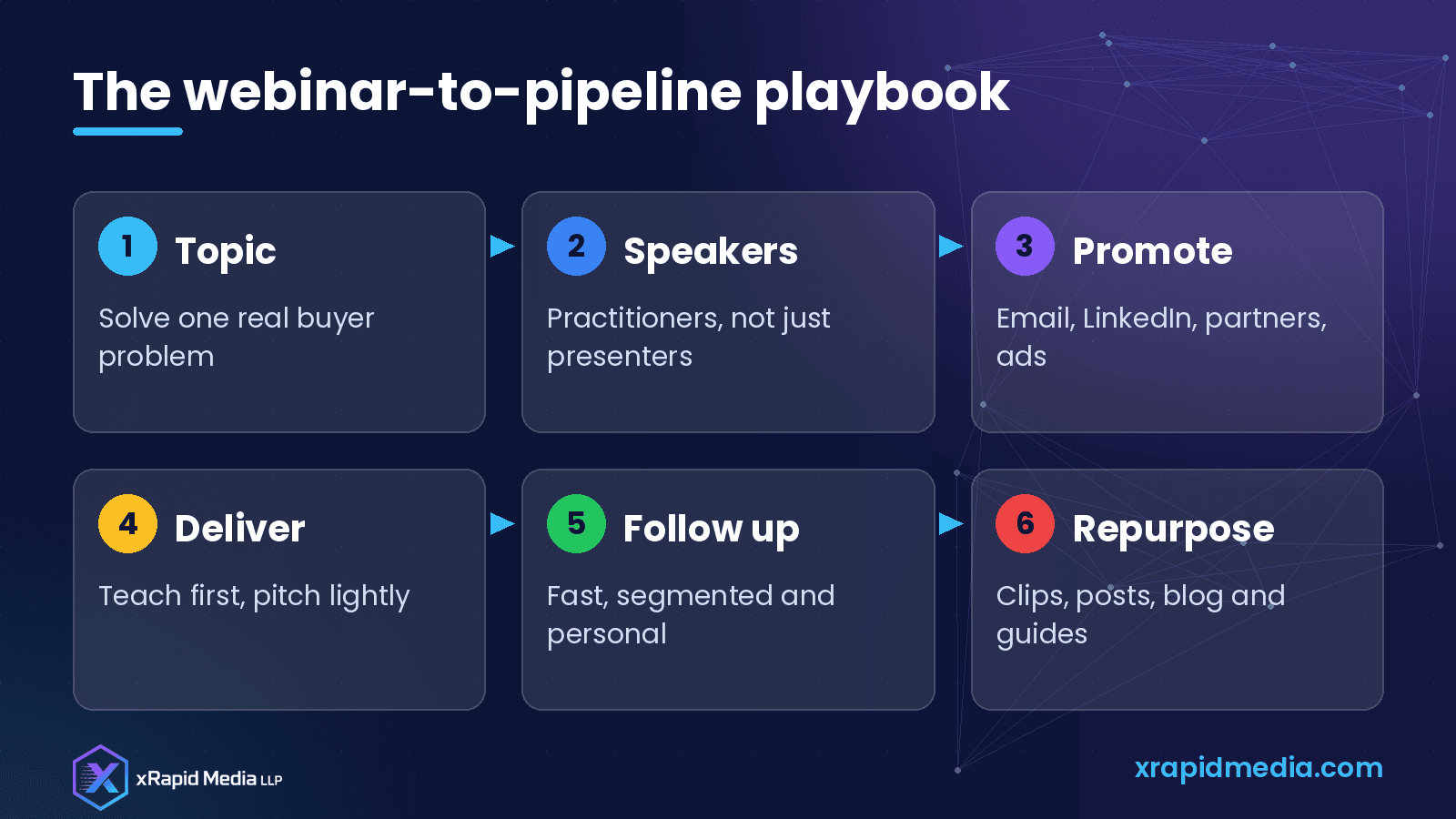
Start with a problem, not a product
The fastest way to get a small audience is to make the webinar about your product. Buyers early in their research aren’t ready for a demo. They’re trying to understand a problem and their options.
Good B2B webinar topics usually sound like this:
- “How mid-sized companies are handling the move to passwordless login.”
- “A practical checklist for migrating your contact center to the cloud.”
- “What IT leaders should ask before choosing a managed security provider.”
Look for topics in your sales calls, support tickets and the questions prospects ask most often. If your sales team keeps explaining the same thing on discovery calls, that’s a webinar.
Choose speakers people want to hear from
Buyers want to learn from practitioners. A solutions engineer who has run dozens of implementations or a customer who has been through the problem is usually more compelling than a senior executive reading prepared slides.
Partner webinars work well too. Co-hosting with a complementary company, such as a cloud provider, a reseller or a technology partner, gives you access to their audience and adds credibility. Agree in advance how registrant data will be shared and make sure registration forms make that clear to attendees.
Give promotion enough time
Many webinars struggle because promotion starts a week before the event. Plan for around three to four weeks where you can, and use several channels:
- Email to your house list, segmented by role or interest where possible.
- LinkedIn posts from the company page and, more importantly, from the speakers’ personal profiles.
- Sales outreach, with reps personally inviting the target accounts they’re working.
- Partners sharing the event with their audiences.
- Paid promotion, such as LinkedIn ads aimed at your target roles and accounts, if budget allows.
Send reminders the day before and an hour before the start. Many registrants simply forget.
Teach first, pitch lightly
During the session, deliver on what the title promised. Spend most of the time on practical advice, examples and answers to real questions. Mention your product where it’s genuinely relevant, and save a short section near the end for how you help, with a clear next step.
Keep it interactive. Polls, live questions and chat give attendees a reason to stay engaged, and they give your team useful insight. A poll asking “What’s your biggest challenge with this today?” can tell sales exactly how to open the follow-up conversation.
Follow up fast and segment your list
This is where many webinars lose their value. Within a day, every registrant should get a follow-up, but not the same one. Split your list into a few groups:
- Attendees who asked questions or answered polls: a personal note from the speaker or a rep, referencing what they asked.
- Attendees from target accounts: priority outreach from the account owner, often with an offer to discuss their specific situation.
- Other attendees: the recording, the slides and one related resource.
- Registrants who didn’t attend: the recording with a short summary of the key points.
Make the next step easy and relevant. For high-intent attendees, that might be a short consultation. For others, it might be a checklist or guide related to the topic.
Score and route webinar leads sensibly
Not every attendee is ready to buy, and treating them that way wastes everyone’s time. Combine webinar engagement with fit, using verified company data such as size, industry and role, plus other intent signals like recent pricing page visits. Send the strongest leads to sales and nurture the rest with relevant content.
Record attendance in your CRM so reps can see it in context. A prospect who attended two webinars on a topic over the past quarter is telling you something.
Get more mileage from every webinar
A single webinar can feed your content calendar for weeks. Turn it into:
- Short video clips for LinkedIn and your website.
- A blog post summarizing the main advice.
- A checklist or guide based on the content.
- Quotes and takeaways for social posts.
- An on-demand page that keeps collecting registrations.
This repurposing often delivers as much value as the live event itself.
Measure what matters
Registration and attendance numbers are useful, but they’re not the goal. Track how many meetings, opportunities and deals involve webinar attendees over the following months. That’s the true measure of whether the program is worth continuing and where to improve.
A simple place to start
If you’ve never run a webinar, start small. Pick one problem your buyers ask about often, find one strong practitioner to present it and promote it for a few weeks. Follow up personally with every engaged attendee. One well-run session will teach you more than a year of planning.
About xRapid Media
xRapid Media LLP is a High Tech B2B Marketing company for technology businesses: software and SaaS companies, IT services and managed service providers, and hardware and IT product vendors. Our team combines positioning and content, account-based marketing, paid ads funnels, verified B2B data, intent signals, email and LinkedIn outreach and appointment setting to help you reach the right buyers and turn their attention into qualified leads and meetings.
Want help putting ideas like these into practice? Email [email protected] or book a time with our team.